
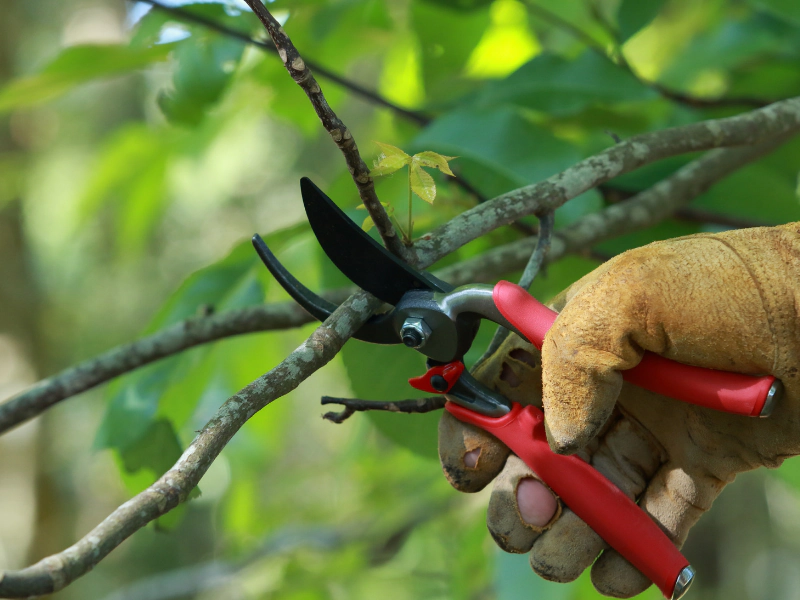

What Is Tree Trimming?
To fully understand what is the difference between tree trimming and pruning, it helps to first define tree trimming.
What is tree trimming? Tree trimming focuses on shaping a tree, improving its appearance, and controlling overgrowth. It typically involves removing excess branches to maintain a balanced canopy and prevent limbs from becoming too large or uneven.
Tree trimming is often performed for aesthetic reasons, but it also helps maintain healthy growth patterns and prevents branches from interfering with nearby structures.
Common Goals of Tree Trimming
Tree trimming is commonly used to:
- Improve the tree’s shape and appearance
- Encourage balanced growth
- Remove overgrown branches
- Improve sunlight penetration to surrounding landscaping
- Keep branches away from roofs, power lines, and walkways
When homeowners ask how do I trim trees, the answer depends on the tree type, growth pattern, and desired shape. However, trimming generally involves selectively cutting back healthy branches to maintain structure and appearance.
Because trimming emphasizes growth management, it is often scheduled seasonally as part of regular landscape maintenance.
What Is Tree Pruning?
Now let’s answer another important question: what is tree pruning?
Tree pruning focuses on the health and structural integrity of a tree. Instead of shaping healthy growth, pruning targets branches that are dead, diseased, damaged, weak, or hazardous.
The main goal of pruning is to reduce risks while improving tree health.
What Is the Purpose of Tree Pruning?
Many homeowners ask what is the purpose of tree pruning or what is the purpose of pruning trees.
Pruning serves several important purposes:
- Remove dead or dying branches
- Stop the spread of disease or pest infestations
- Eliminate weak or unstable limbs
- Improve airflow and sunlight penetration
- Reduce hazards from falling branches
- Strengthen the overall structure of the tree
Unlike trimming, pruning is often done to address problems before they become dangerous or damaging.
For example, if a branch is cracked after a storm or showing signs of decay, pruning may be necessary to protect nearby people, vehicles, or structures.
Tree Trimming vs Tree Pruning: Understanding the Difference
The easiest way to understand tree trimming vs tree pruning is to think about the main objective of each service.
Tree Trimming
- Focuses on appearance and growth management
- Removes overgrown or uneven branches
- Helps maintain shape and aesthetics
- Usually performed regularly for maintenance
Tree Pruning
- Focuses on tree health and safety
- Removes dead, diseased, or hazardous limbs
- Prevents disease spread and structural problems
- Performed as needed based on tree condition
The tree pruning vs trimming difference becomes easier to recognize once you understand that trimming improves how a tree looks, while pruning improves how a tree functions and survives.
When Should Trees Be Trimmed?
Knowing when trimming is needed helps homeowners maintain healthy growth without overcutting.
Common signs a tree may need trimming include:
- Overgrown or uneven branches
- Limbs touching the roof or siding
- Branches blocking pathways or driveways
- Reduced sunlight reaching the yard
- A tree canopy that looks misshapen
Tree trimming is often completed during growing seasons to encourage balanced regrowth and maintain appearance.
If you are asking how do I trim trees, smaller branches may sometimes be manageable for homeowners, but larger trees often require specialized equipment and expertise.
When Should Trees Be Pruned?
Pruning becomes important when tree health or safety is at risk.
Signs a tree may need pruning include:
- Dead or hanging branches
- Visible decay or disease
- Cracked or storm-damaged limbs
- Branches growing too closely together
- Signs of pest infestation
- Weak structural growth
Because pruning focuses on health, timing matters. Many trees benefit from pruning during dormant seasons when stress on the tree is minimized.
In urgent situations, such as storm damage, pruning may need to happen immediately regardless of season.
Risks of Improper Trimming or Pruning
Incorrect tree care can do more harm than good.
Some common mistakes include:
1. Over-Trimming
Removing too many branches weakens a tree and reduces its ability to grow properly.
2. Incorrect Cutting Techniques
Poor cuts can leave trees vulnerable to disease and pests.
3. Removing Healthy Branches Unnecessarily
Improper pruning may destabilize the tree’s structure.
4. DIY Safety Risks
Large branches, ladders, and power equipment create injury risks for inexperienced homeowners.
This is one reason why understanding what is the difference between tree trimming and pruning matters before beginning any tree maintenance.
Benefits of Professional Tree Care
While small maintenance tasks may seem manageable, professional tree care offers several advantages.
1. Accurate Tree Assessment
Professionals can identify disease, structural weakness, and growth issues early.
2. Proper Cutting Techniques
Certified tree specialists understand how to trim and prune without damaging tree health.
3. Improved Safety
Professionals safely handle tall trees, heavy limbs, and hazardous branches.
4. Long-Term Tree Health
Routine care helps trees live longer while reducing future problems.
Professional service also ensures the right approach is used based on the tree pruning vs trimming difference rather than applying the wrong solution.
Why Tree Maintenance Matters
Consistent maintenance improves both property appearance and safety.
Benefits of regular trimming and pruning include:
- Healthier, stronger trees
- Improved curb appeal
- Better sunlight and airflow
- Reduced storm damage risk
- Fewer hazardous branches
- Increased property value
Proper maintenance also prevents small issues from becoming larger and more expensive problems later.
Final Thoughts
Understanding what is the difference between tree trimming and pruning helps homeowners make better decisions about tree care. While what is tree trimming focuses on shaping, appearance, and growth control, what is tree pruning is centered on tree health and hazard prevention.
Knowing what is the purpose of tree pruning, when trimming is necessary, and recognizing the tree trimming vs tree pruning distinction can help protect your property while supporting healthier, longer-lasting trees.
Whether you are managing overgrown branches, dealing with storm damage, or simply maintaining curb appeal, proper tree care plays an essential role in keeping landscapes safe, attractive, and thriving for years to come.
